Crate Expectations: Winter Delivery Containers That Won’t Turn to Mush
There is a particular sinking feeling that comes with lifting a flower box off the van in January and finding the bottom has gone soft. The blooms may be fine, but the box has turned into a damp, floppy liability. For UK florists, winter delivery is less about snow drama and more about persistent drizzle, road spray, cold van floors and condensation. That makes the choice of delivery container a workroom issue, not just a packaging afterthought.
Single-use cardboard, returnable crates and hybrid containers all have a place. The trick is matching the container to the route, the customer and the realistic amount of faff your team will tolerate on a wet Tuesday. Here is how to compare them without getting lost in spreadsheet fog.
Cardboard: still useful, just not invincible
Corrugated cardboard is light, cheap per unit, printable and widely recycled. For a florist sending a one-off gift bouquet via a courier network, it remains a sensible default. The problem is moisture. Standard corrugated board loses strength quickly when wet, and a damp box stacked under two others can collapse just enough to bruise stems or crack a vase.
If you stay with cardboard for winter, treat it as a fair-weather friend. Use a water-resistant liner or a poly-lined insert where condensation is likely, keep boxes off the van floor on a pallet or rack, and avoid stacking heavy items on soft board. Waxed or coated boards resist water better but can complicate recycling in some local authority areas, so check before you switch. The real cost per trip is low, but the failure rate in wet conditions is higher than most shops budget for.
Returnable crates: the workhorse option
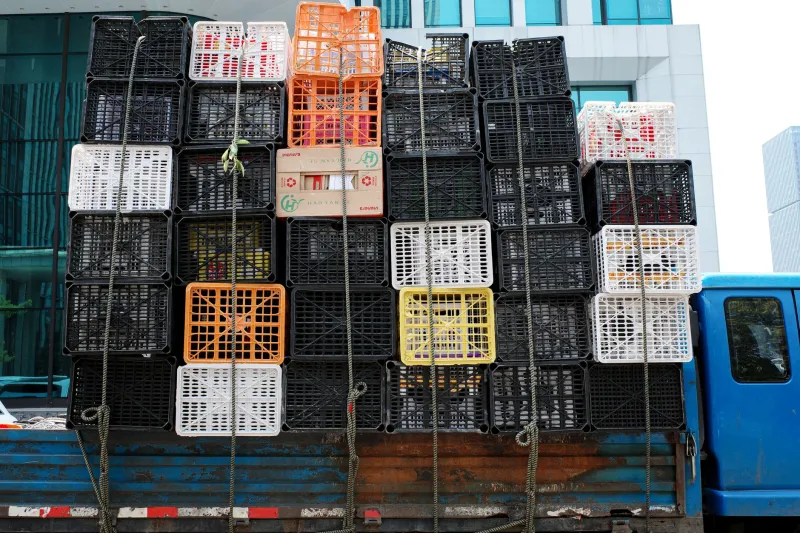
Solid-sided returnable crates, usually polypropylene or similar, are the obvious upgrade for regular local deliveries. They shrug off rain, wipe clean and stack predictably. They also protect stems better than a collapsing box because the walls stay rigid.
The catch is that you are now running a small logistics operation. Crates need a home, a cleaning routine and a way back to the shop. If your driver hands over a crate and never sees it again, you have simply bought expensive single-use packaging with extra steps.
Stacking and van-space maths matter here. Measure your van shelving and crate footprint before ordering a pallet of bargains. A crate that is 5 cm too tall for your shelf can waste more space than it saves. For a typical small van run, a mix of shallow crates for bouquets and deeper crates for vases or mechanics often works better than one uniform size. Label crates by route or customer group so they do not migrate into the back of the workroom and stay there.
Hybrid containers: the middle ground
Hybrid options include foldable crates, crates with removable liners, and sturdy boxes with reusable inserts. They can be useful if you need the protection of a crate but the collapsed storage of a box. Foldable crates are handy for shops with tight storage, though hinges and joints need checking regularly. A crate that folds flat but leaks at the base is not a winter win.
A practical hybrid approach is to use returnable crates for your own delivery runs and cardboard for courier consignments where you cannot control the return leg. That keeps the reusable kit in the part of the operation where it can actually come back.
Labelling that survives the rain
A returnable system lives or dies on labels. Paper labels on wet crates turn to pulp. Use waterproof labels, cable ties or robust crate clips, and include a clear return instruction. Something as simple as “Please leave this crate out for collection” works better than a barcode nobody can scan.
Number your crates and keep a simple log. If you run three routes, colour-code by route. If you lend crates to wedding venues, agree the return date in writing and put a label on the crate itself. Chasing crates is dull, but it is cheaper than replacing them.
Cleaning without turning it into a project
Returnable crates need a between-jobs clean, especially after wet deliveries. A rinse, a wipe with a suitable food-safe sanitiser where needed, and thorough drying before stacking will stop the van smelling like a pond. Do not stack wet crates nested tightly; let air circulate. Keep a designated drying area in the workroom, even if it is just a rack near the door.
Check crates for cracks and split corners every few weeks. A cracked crate can snag ribbon or leave a sharp edge against a wrapped bouquet. Retire damaged ones promptly rather than letting them clutter the van.
Supplier take-back and real cost per trip
Ask your supplier what happens at end of life. Some offer take-back or collection schemes for crates, and some packaging suppliers sell crates with a deposit or return arrangement. If take-back is not available, check whether your local recycling centre accepts the material. Polypropylene crates are recyclable in principle, but kerbside collection varies across the UK.
Do the cost per trip maths honestly. A cardboard box that costs £1.20 and is used once is £1.20 per trip. A returnable crate that costs £8 and survives 30 trips is about 27p per trip before cleaning and loss. If you lose one in five crates, that changes the sums. The reusable option usually wins on regular local runs, but only if the return rate is high.
A decision checklist for moving away from soggy boxes
- Map your routes: which deliveries are yours and which go by courier?
- Measure your van shelves and workroom storage before buying crates.
- Start with one route or one customer group, not the whole business.
- Choose waterproof labels and a simple return instruction.
- Set a cleaning and drying routine that fits the end of the day.
- Track crate loss for four weeks before scaling up.
- Ask suppliers about take-back and end-of-life options.
- Keep a small stock of cardboard for one-way and courier jobs.
The goal is not to banish cardboard forever. It is to stop using the wrong container in the wrong conditions. A damp winter is a good stress test for any delivery system. If your containers can come back, stack up and dry out without turning to mush, you are already ahead of the box pile by the back door.